Lesson 8: Complementary Feeding in Developing Countries
8.2 Infections
According to a review by Kramer & Kakuma in 2012, in developing countries, exclusive breastfeeding for six months reduces the risk for gastrointestinal infections and may reduce the risk for respiratory infections in some populations (Kramer & Kakuma 2012). After six months, however, infants in developing countries must begin to acquire essential nutrients from complementary food sources, as breast milk alone proves nutritionally inadequate. For more information on the nutritional inadequacies of exclusive breastfeeding after six months of age, please see unit 1. The introduction of complementary foods in developing countries poses particular challenges since bacterial food contamination is a very common problem.
Contamination of complementary foods consumed by children in developing countries causes an increased risk of gastrointestinal infections, specifically diarrhea. This is because porridges that are commonly fed to children during infancy are often contaminated by bacteria during preparation or are prepared with unsafe drinking water or cow's milk (Weisstaub & Uauy 2012). For more information on the safe preparation and storage of complementary foods, please see unit 3.
The problem of contamination is compounded by the fact that there is a low availability of refrigerators for food storage. Storage of foods at room temperature provides opportunistic time windows for bacterial proliferation and bacteria growing at ambient temperatures may have doubling times as fast as 20-30 minutes (Weisstaub & Uauy 2012). For this reason, infant foods should be consumed immediately or stored properly in cool temperatures.
The contamination of infant formula and other complementary foods in developing countries may be responsible for 25-33% of all deaths of children younger than five years of age, globally (Weisstaub & Uauy 2012). Figure 8 shows the proportion of deaths in children less than five years of age, demonstrating that diarrhea is the second leading contributor premature death during infancy and early childhood worldwide.
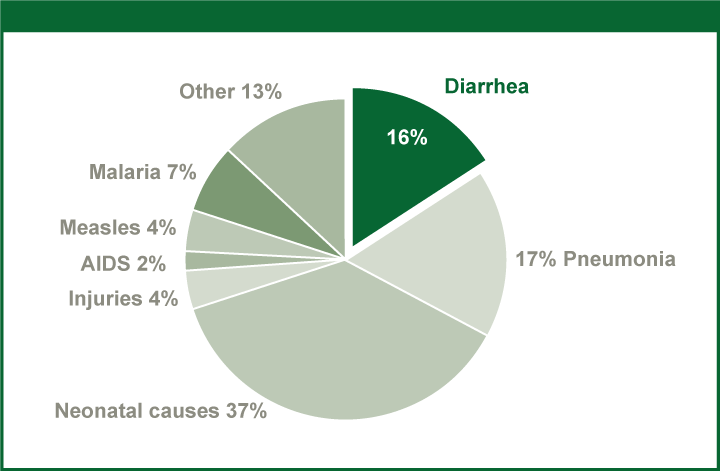
Figure 8: Diarrhea is the second most common cause of childhood mortality worldwide
Source: UNICEF & WHO 2009, reprinted with permission of UNICEF & WHO
For the reasons mentioned previously, most of the deaths from diarrhea in children less than 5 years of age occur in developing countries. Figure 9 shows the distribution of deaths from childhood diarrhea in different regions of the world, with Africa and South Asia, accounting for more than 80% of all cases, globally.
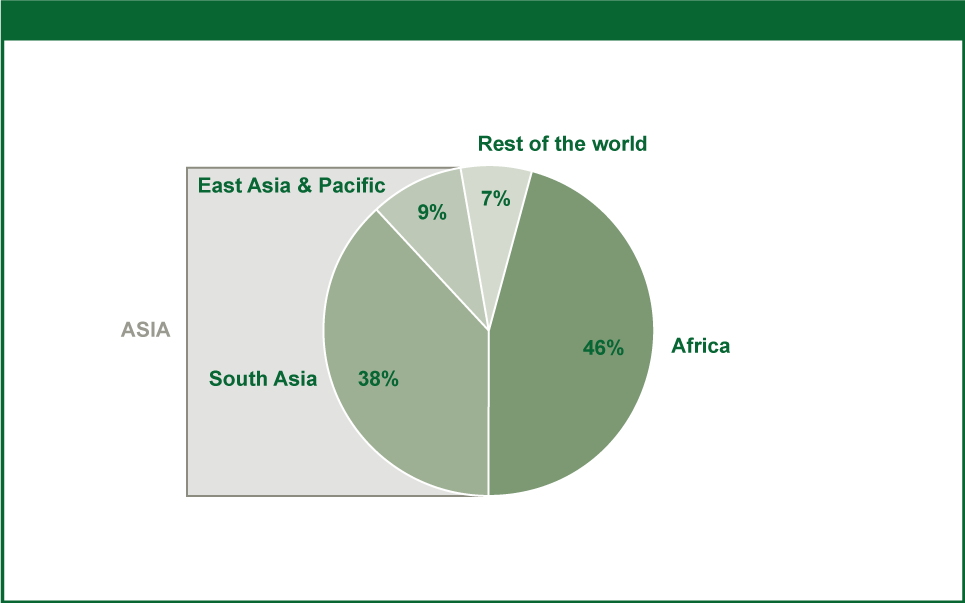
Figure 9: Proportional distribution of deaths due to diarrheal diseases among children under five years of age, by region, 2004
Source: UNICEF & WHO 2009, reprinted with permission of UNICEF & WHO
Diarrhea is most common among children in the complementary feeding period. Since children may not be hungry and mothers may not feed children due to cultural or other beliefs, diarrhea often results in dehydration, a leading cause of morbidity and mortality (UNICEF & WHO 2009). Optimal feeding during illness is critical for restoration of health and child survival since gastrointestinal illnesses weaken the immune system and cause susceptibility to other diseases. Diarrhea can lead to or worsen malnutrition as nutrients and fluids are expelled rapidly from the body (UNICEF & WHO 2009). Interestingly, both vitamin A and zinc supplementation in developing countries have proven to reduce the severity, duration and complications associated with diarrheal diseases (UNICEF & WHO 2009). Children with a good vitamin A status, are less likely to contract diarrheal diseases (UNICEF & WHO 2009). Breast milk and certain complementary foods are natural sources of vitamin A for infants and young children and help reduce the occurrence of gastrointestinal infections in developing countries. Oral rehydration therapy and the continued provision of complementary foods and breast milk are lifesaving treatments for diarrheal infections (The United Nation's Children's Fund 2009). Unfortunately, in only 39% of the cases in developing countries are these treatments practiced during diarrheal episodes (UNICEF & WHO 2009) More about rehydration and complementary feeding during illness is discussed in unit 3.
Further information on hygiene, food handling and prevention of food-borne illness can be found in unit 3.