Lesson 3: Monitoring Growth
3.3 Definition of Growth Faltering
Many investigators tend to define growth faltering at 36 weeks of postmenstrual age (PMA) or at the time of hospital discharge, as a body weight smaller than the 10th percentile. However, clinicians should evaluate growth continuously and recognize growth faltering early to be able to reverse the process (Poindexter 2014).
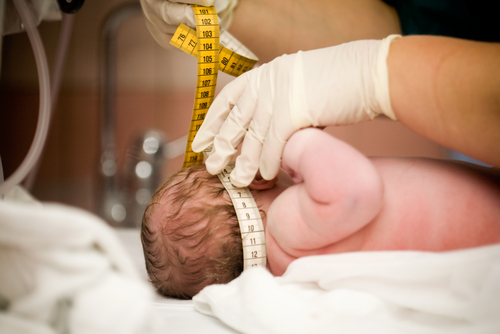
Body weight alone should not be used to monitor growth in the preterm infant. The use of previously mentioned standards, including head circumference and linear growth are critical to identify growth faltering. Body composition should also be monitored. There is a close association between linear growth and lean body mass, which can be used to assess prognosis for later health outcomes, such as obesity and diabetes. Also, in preterm infants, head circumference growth has been shown to be associated to neurodevelopmental outcomes (Poindexter 2014).
Infants who are below the 10th percentile for one or more growth parameters are considered to show growth faltering. Even if no anthropometric measures are below the 10th percentile, infants should be considered to have growth failure when they fall off a growth trajectory they have been following since regaining their birthweight (Poindexter 2014).