Lesson 9: Vitamins
9.2.4 Fat-soluble Vitamins - Vitamin K
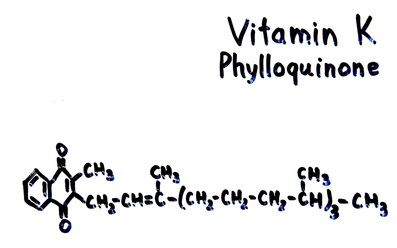 The name vitamin K comes from the Danish/German word "koagulationsvitamin”, which means the clotting vitamin. There are two forms of vitamin K:
- K1 or phylloquinone, the plant form, found in green vegetables such as spinach and broccoli.
- K2 or menaquinones, which are gut micro-flora synthetized.
Vitamin K has a major role in coagulation, being necessary for the activation of several coagulation factors and prothrombin. Due to the wide spread distribution of vitamin K dependent proteins, found in nearly all tissues in the human body, vitamin K is essential not only in coagulation, but also in cell cycle regulation, cell adhesion and bone metabolism.
Cord blood at birth has very low levels of vitamin K, suggesting that placental transfer is minimal. Human milk is also low in vitamin K, with concentrations lower than 10 µg/l. Therefore newborn infants are at risk of vitamin K deficiency (Greer 2005). By 7 to 10 days after birth, most preterm infants will develop at least subtle vitamin K deficiency unless supplementation is carried out. To avoid the hemorrhagic disease of the newborn, initially described in 1894 by Charles Townsend, and currently termed 'Vitamin K deficiency bleeding' (VKDB) (Obladen 2015), vitamin K prophylactic supplementation - either intramuscular or oral - is a wide spread measure in neonatology (Lippi & Franchini 2011).
In preterm infants (<32 weeks of age), an intramuscular dose of 0.2 mg of vitamin K1 was shown to be satisfactory in the maintenance of vitamin K status and metabolism without hepatic overload (Clarke et al. 2006). Preterm infants with body weight higher than 1000 g should still be given the dose of 1 mg of vitamin K intramuscular at birth, which is the current recommendation for term infants. In preterm infants, intravascular administration is sometimes used to avoid the inconvenience of intramuscular injection (pain, inflammation and hematoma). When injected intravenously, the dosage should not exceed 0.4 mg/kg (Shearer 2009). Presently, we await the results of a Cochrane review to be published late-2015 to determine vitamin K prophylaxis effectiveness in the prevention of VKDB in preterm infants (Ardell et al. 2010).